What is a donor-advised fund? It's essentially a charitable savings account. You open it, put money or investments into it, get a tax deduction right away, and then decide later, on your own schedule, which charities you want to recommend the account directs funds to. Think of it as a "give now, decide later" account.
If you're thinking about giving generously to causes you care about, and you happen to hold stocks or mutual funds that have grown a lot in value over the years, a donor-advised fund (DAF for short, because the finance world never met an acronym it didn't like) can make that giving both more generous and more tax-efficient.
The Mechanics Behind the Gift
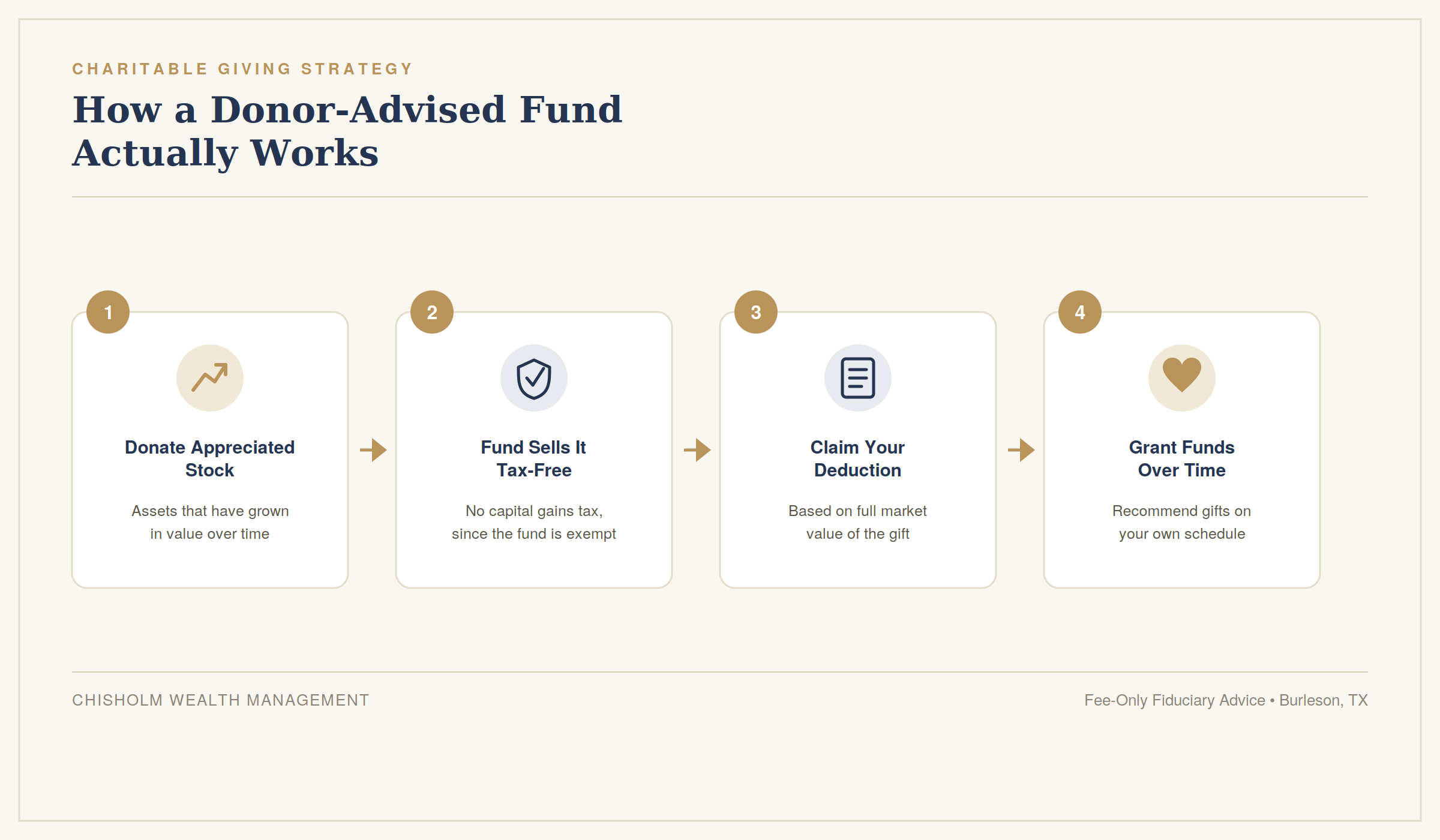
Here's where it gets interesting. Normally, if you sell stock that's gone up in value, you owe capital gains tax on the profit.
But if you donate that same appreciated stock directly to a donor-advised fund instead of selling it first, something nice happens: the fund is tax-exempt, so it can sell the stock without owing that capital gains tax. And you still get to claim a charitable deduction based on the full value of the stock at the time you gave it.
In plain terms: you skip a tax bill you'd normally owe, and you still get credit for the full gift. It's one of the few moves in the tax code that feels like it's actually on your side.
Your Money, Your Timeline
Once the assets are inside the fund, the sponsoring organization sells them and reinvests the proceeds based on your preferences. From there, the money can be invested while it waits for you to decide where it goes.
That's the real flexibility here: the tax deduction and the actual charitable gift don't have to happen at the same time. You can put a large gift into the fund in one year (maybe a year with unusually high income, or after a big financial event), take the deduction that year, and then recommend grants to your favorite charities over the following months or years, whenever you're ready.
The charities still get the money eventually. You just get to control the pace by making the grant recommendations you like.
How This Fits Into a Bigger Picture
Beyond the immediate tax break, moving substantial wealth into a donor-advised fund during your lifetime can also reduce the size of your taxable estate, which may help preserve exemptions you'd rather use elsewhere. Forfamilies in the Burleson and greater Fort Worth area thinking about both generosity and how their wealth gets passed on, a DAF can quietly do both jobs at once: support the causes you care about now, and simplify your estate plan later.
If you've already looked into strategies formanaging appreciated company stock, a DAF is a natural complement, since both are built around the same idea: don't hand over more to the IRS than you have to when an asset has grown in value.
A Few Rules Worth Knowing
There are real limits here: how much you can deduct in a given year, which types of assets qualify, and how each sponsoring organization manages the fund day to day. Funds you put into a DAF are also irrevocable (you can’t take the funds back out), so the details matter. This is genuinely a "talk to your advisor and tax professional before you set one up" situation, not a DIY weekend project.
Frequently Asked Questions
What is a donor-advised fund? A charitable investment account that lets you contribute cash or investments, receive an immediate tax deduction, and recommend grants to charities on your own timeline.
Can I donate stock instead of cash? Yes, and it's often the smarter move. Donating appreciated stock (that you’ve held longer than a year) directly to a DAF generally lets you avoid the long-term capital gains tax you'd owe if you sold it yourself, while still deducting its full value.
Do I have to give the money to charity right away? No. You get the tax deduction in the year you contribute, but the actual grants to charities can be spread out over as many years as you'd like.
What happens to the money while it's sitting in the fund? It stays invested and can grow tax-free until you're ready to recommend it to a charity.
The Bottom Line
A donor-advised fund is a practical, flexible way to simplify your giving. It helps you make the most of assets that have appreciated over time, gives you an immediate tax benefit, and lets you support the causes you care about on your own schedule. Used thoughtfully, it can become a cornerstone of both your giving strategy and your legacy.
If you'd like help figuring out whether a donor-advised fund makes sense for your situation,book an introductory call. We promise not to make you learn any more acronyms than necessary.
Chisholm Wealth Management is a financial planning firm located in Burleson, Texas serving individuals and families throughout Texas and across the country.
CLICK HERE TO READ OUR DISCLOSURES
Your Money, Your Timeline
Once the assets are inside the fund, the sponsoring organization sells them and reinvests the proceeds based on your preferences. From there, the money can keep growing tax-free while it waits for you to decide where it goes.
That's the real flexibility here: the tax deduction and the actual charitable gift don't have to happen at the same time. You can put a large gift into the fund in one year (maybe a year with unusually high income, or after a big financial event), take the deduction that year, and then recommend grants to your favorite charities over the following months or years, whenever you're ready.
The charities still get the money eventually. You just get to control the pace.
How This Fits Into a Bigger Picture
Beyond the immediate tax break, moving substantial wealth into a donor-advised fund during your lifetime can also reduce the size of your taxable estate, which may help preserve exemptions you'd rather use elsewhere. For families in the Burleson and greater Fort Worth area thinking about both generosity and how their wealth gets passed on, a DAF can quietly do both jobs at once: support the causes you care about now, and simplify your estate plan later.
If you've already looked into strategies for managing appreciated company stock, a DAF is a natural complement, since both are built around the same idea: don't hand over more to the IRS than you have to when an asset has grown in value.
A Few Rules Worth Knowing
There are real limits here: how much you can deduct in a given year, which types of assets qualify, and how each sponsoring organization manages the fund day to day. These details matter, so this is genuinely a "talk to your advisor and tax professional before you set one up" situation, not a DIY weekend project.
Frequently Asked Questions
What is a donor-advised fund? A charitable investment account that lets you contribute cash or investments, receive an immediate tax deduction, and recommend grants to charities on your own timeline.
Can I donate stock instead of cash? Yes, and it's often the smarter move. Donating appreciated stock directly to a DAF generally lets you avoid the capital gains tax you'd owe if you sold it yourself, while still deducting its full value.
Do I have to give the money to charity right away? No. You get the tax deduction in the year you contribute, but the actual grants to charities can be spread out over as many years as you'd like.
What happens to the money while it's sitting in the fund? It stays invested and can grow tax-free until you're ready to recommend it to a charity.
The Bottom Line
A donor-advised fund is a practical, flexible way to simplify your giving. It helps you make the most of assets that have appreciated over time, gives you an immediate tax benefit, and lets you support the causes you care about on your own schedule. Used thoughtfully, it can become a cornerstone of both your giving strategy and your legacy.
If you'd like help figuring out whether a donor-advised fund makes sense for your situation, book an introductory call. We promise not to make you learn any more acronyms than necessary.
Chisholm Wealth Management is a financial planning firm located in Burleson, Texas serving individuals and families throughout Texas and across the country.